
Attending a Japanese Wedding

Written by
Name: Stephanie
Country of origin: USA
How long you’ve lived in Japan: 6 years
Where you live in Japan: Tokyo (and 1 year in Gunma)
Instagram
So you’ve been invited to a Japanese wedding! This is a big deal, as the guest list for Japanese weddings is often much smaller than the big, lavish weddings that are almost standard in western countries. If you’re coming to the wedding, it likely means you’re close to the bride or groom, and you’ve also likely known each other for a while. Japanese wedding customs and etiquette are kind of rigid, and you definitely can’t wing it with attending, so let’s unveil the do’s and don’ts of attending a Japanese wedding.
Being Invited and RSVPing
One big difference between western and Japanese weddings is that you’ll likely be invited alone. If your partner or family wasn’t specifically invited, it is safe to assume they have not been invited. This might seem like a big offense, but believe me, it’s not. Whereas in America, if you go to a wedding alone it’s quite embarrassing, and you might be sat at the singles’ table looking for your next date, it’s not like that in Japan. Sure, people might meet someone they like at weddings in Japan, but it’s not to the degree where people think “omg, that person is alone, they MUST want someone,” because a lot of the guests probably came alone even if they’re not single. Japanese weddings are both expensive to host and also expensive to attend, so if your partner wasn’t invited the wallets of both you and the newlyweds will be happier. Plus, in Japan, personal dynamics are a big consideration, so if the couple doesn’t know your partner (or not very well), it might feel awkward to have them (a stranger) there on their special day.
Be sure to send your RSVP by the deadline. If you can’t go, it’s customary to send a congratulatory card with your monetary gift, but you can give less (¥10,000 to ¥20,000 if you’re a friend) since you won’t be expected to cover the cost of your meal and gift.
These days, a lot of couples are sending invitations online. If you get an online wedding invitation, this is great because it’s easy and you can use your in-browser translator if you can’t read Japanese.
If you get a paper invitation, you have to send back the attendance slip included in the invitation. The two options are:
・ご出席 – go-shusseki – Will Attend
・ご欠席 – go-kesseki – Cannot Attend
Cross out the one that does not apply to you. For the one that applies to you, cross out the ご (go) hiragana as that’s an honorific (this is written for other people, not yourself).
Preparing the Money Gift
-Buying the Envelope
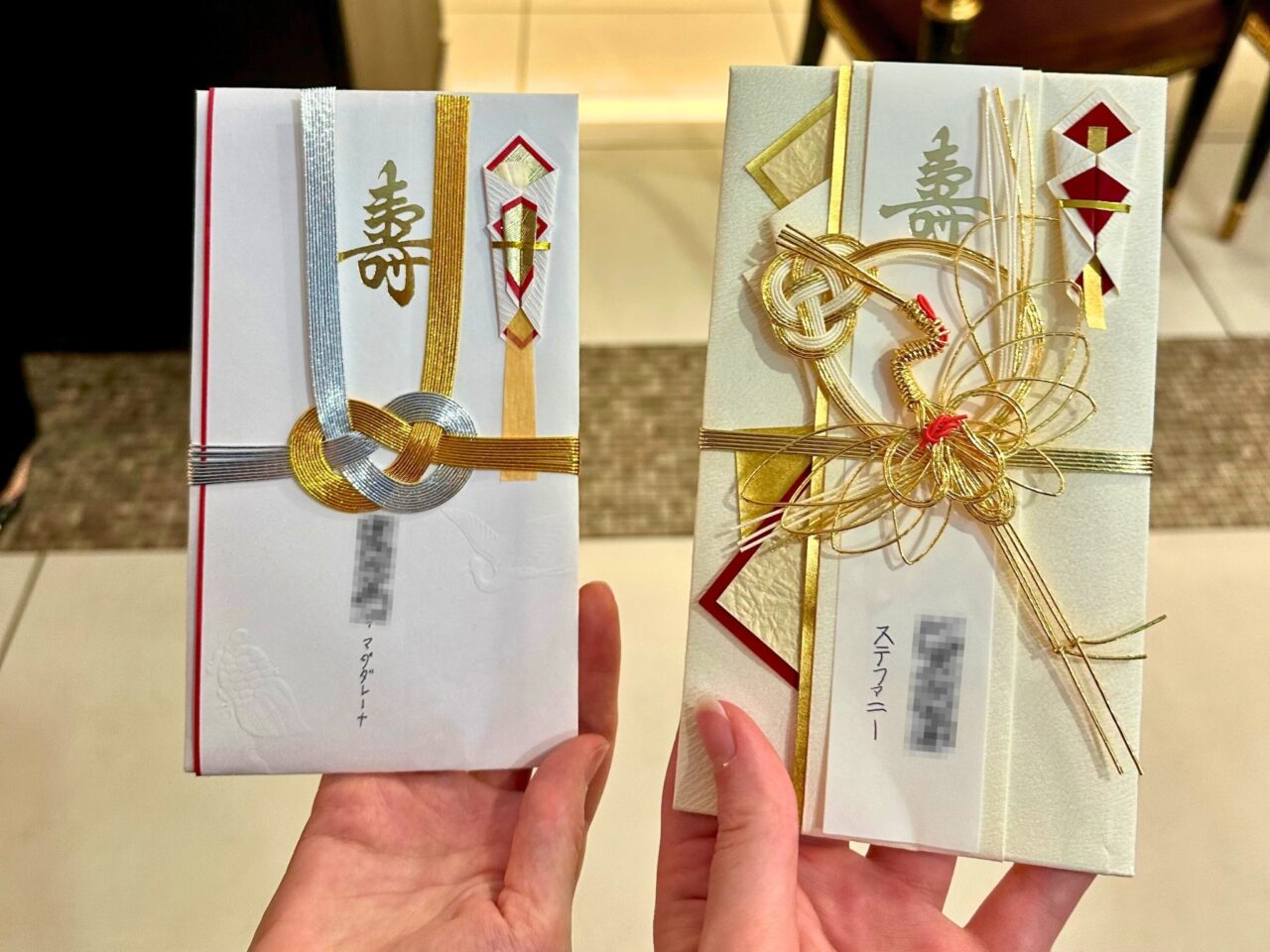
One nice thing about attending a Japanese wedding is that you don’t have to worry about choosing a gift, you just give money. But the rules and customs around this money gift-giving process are very set in stone, so don’t just think you can get any old greeting card and stick some cash in it. In fact, you don’t use a greeting card at all, you get a special envelope called a goshūgi-bukuro (ご祝儀袋).
You can get these special envelopes at stationery stores and even some convenience stores. But when choosing an envelope you have to choose carefully. There will be one of two kanji messages on the card (御祝 or 寿) for congratulations, and the envelope should be colorful. If you get a black-and-white envelope, that’s for funerals, so that won’t be taken well. But if you get an envelope that’s too fancy, that could be a mistake too, since they’re for guests with a higher status who are expected to give more money, so your “friend rate” gift will be a letdown upon opening.
I suggest talking to the staff at the stationery store, which I did for both Japanese weddings I attended. I told them I want to pick a card for a wedding, and asked how I can choose a nice one. The first time she told me to just feel the vibe of the card: how close am I to the bride, what design do I think she’d like or do I like, etc. The staff then approved of my choice. The second time I went back to the same store and she said my choice was very nice, but it was too nice as in it’s for the high-rank guests, and showed me the rack for the friend-guests. Phew!
-Writing on the Envelope
Next, writing the card is a bit of a task. There is an outer- and an inner-envelope. On the inner-envelope you write your mailing address, and the outer-envelope is for your name. Write them both vertically, Japanese-style. If you can’t write Japanese, English will be fine. Especially for the outer-envelope, spacing is important. Your envelope will come with 3 strips of paper inside for writing your name for the outer-envelope. I think 2 are for practice, so save the fancy one for last. Take one of the draft paper slips, put it through the decorative wire on the envelope, and draw a line where the bottom of the decoration ends so you can see where your name should start. Then write your name vertically (or if you will write in English, turn the paper sideways and write left-to-right like normal in English so the vertical spacing will be the same as in Japanese). Once you’re happy with your name and the spacing, you can trace your name (but not the starting line) on the fancy paper slip. It’s best if you can use a brush pen, but I didn’t have one so I made due with a regular pen.
-How Much to Gift
As mentioned earlier, the custom of wedding money gift-giving is very set in tradition, and the amount you should give is especially so. The money gift might seem steep to those used to attending wedding in the west, but if you’re going to attend a wedding, you have to give this amount. There’s no “skimping out and hoping the couple isn’t too offended” possible.
・A single attendee should give ¥30,000
・A couple should give ¥50,000 together in one envelope
・A boss should give at least ¥50,000
・If you’re bringing your child(ren), they require a monetary gift too, which will vary on if they’re eating a child’s or adult’s meal and if the couple needed to book a nursery room or not, so I’d ask the couple beforehand in this case
A coworker once explained to me that it’s very important not to give only ¥10,000, because 1 is a lonely number. Likewise, multiples of 2 (¥20,000, 40,000, 60,000, etc.) should not be given because 2 can be split.
Be sure to get new, fresh bills from the bank and put them in the inner-envelope inside the goshūgi-bukuro.
What to Wear
For men, a standard suit will suffice, with a few guidelines. The suit should be dark (black, gray, navy), and the shirt should be light but neutral (white or light blue, no yellow, fellas). Your tie should also be light and neutral, such as white, light blue, or the like. No black tie since that’s for funerals, and no patterns or funky colors.
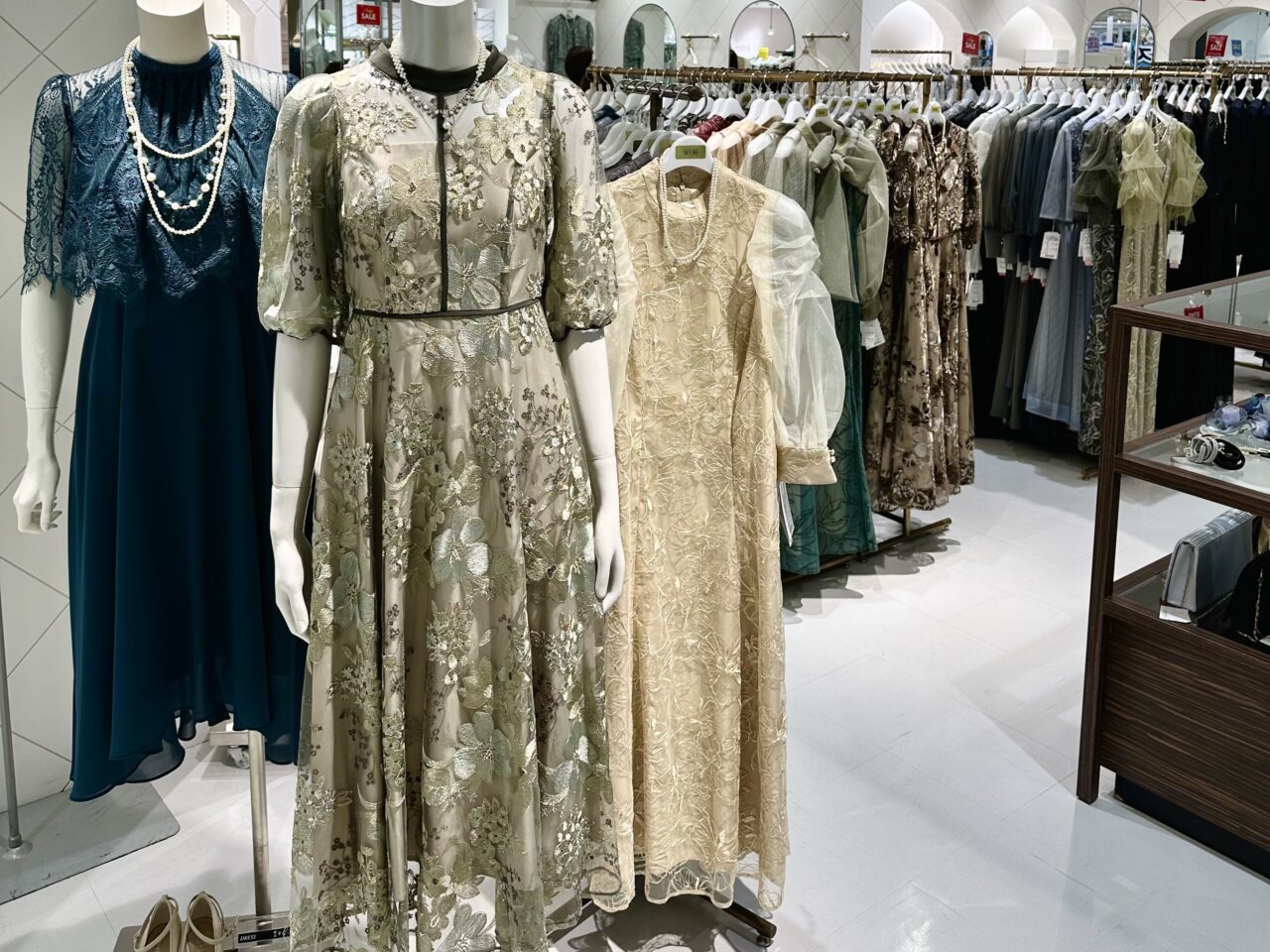
For women, dress shopping can be a bit stressful if you don’t fit well into Japanese clothing. It’s likely that whatever you’ve worn to a wedding back home will not work here, as the wedding attendee fashion is very conservative. In the US and other countries, it’s common to attend a wedding as a real show-stopper, but in Japan the goal is to not take attention away from the bride. Absolutely do not wear white. Colors are fine, but they should be conservative. Dark colors or pastels are preferable over neons. Do not show your shoulders (you can get a sleeveless dress if you wear a shawl), and ideally your knees shouldn’t show. Be sure it’s not body-con. No sandals, wear close-toed heels; traditionally ladies wear low heels (not stilettos or flats), but at the last wedding I attended I saw some nice flats, so maybe things are loosening up a bit. Pearls are always welcome, or if you’re wearing metal jewelry make sure it’s not too flashy or blinged out. If you need to bring a big bag of stuff, bring a small fashionable clutch as your “display handbag.”
My friend has 1 dress she wears to every wedding, and with the last wedding I attended I decided that I’ll make that dress my go-to as well. I honestly think a lot of Japanese wedding guest dresses look like things a Mother of the Bride would wear back home, but if you look hard enough (or online, or back home when you visit), you might find something appropriate that you like.

Before the Ceremony on the Day-Of
The first thing you’ll want to be sure to do on the day of the wedding, after getting dolled up and remembering to bring your money envelope, is to arrive at the venue early. For my first wedding in Japan I had my transportation all planned out to arrive on time, and while on the way I received a frantic text from the bride asking if I was okay… That was embarrassing!
When you arrive (early) and check-in, there will likely be a coat check where you can check your big bag (I brought flat shoes for the commute, so I had a tote in addition to my clutch), and if the wedding and reception are happening in the same venue, you will also give up your gift money envelope now and have some fun sign-in activities among the couple’s photos displayed. Next, you’ll be escorted to a waiting room with welcome drinks and maybe snacks. This is a great time to socialize a bit and congratulate the family of the bride and/or groom (whichever one invited you).
When it’s time to enter the ceremony venue, the venue staff will call different groups of people such as “bride’s friends” or “groom’s family,” so keep an ear open, try to follow other guests, or tell the staff if you get lost or confused (they’ll probably ask your name and check the guest list to see where you belong). Some vocabulary to keep in mind for this point and really the rest of the day are:
・新婦 – shinpu (shin-poo) – bride
・新郎 – shinrō (shin-roh) – groom
Church Versus Shrine Ceremonies
After you and everyone takes their seat in the wedding venue, which could be a church or a Shinto shrine, the ceremony will start shortly after. One difference from Western weddings is that the couple isn’t actually getting married that day… They already are married! Rather than having a marriage license system that grants you to be married by an officiant at your wedding ceremony, the actual legal marriage happens at city hall sometimes months before the ceremony.
Whether the wedding you’re attending is a western church wedding or a Shinto shrine wedding, I’m sure it’ll be interesting for you. In a church, you can ask yourself if the priest is actually a religious figure or just the local English teacher with a weekend side gig. It’s also a bit fun to compare the ceremony to western weddings in the West: there is no wedding party, etc. Moreover, because many of these churches are dedicated wedding venues, rather than holy sanctuaries, there may be some features you’ve never seen in a church before such as fun lights and the like.
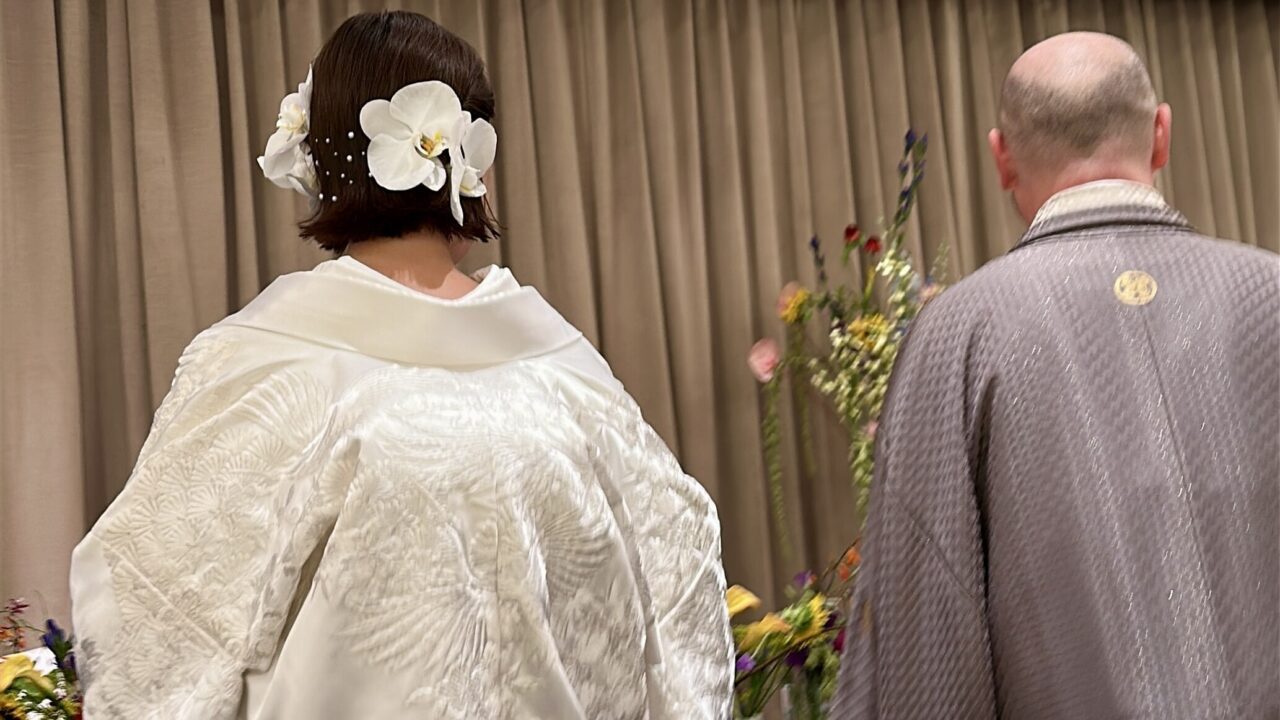
If it’s a shinto wedding ceremony, this is a great opportunity to take in some cultural practices that you don’t usually get to see. This could include traditional Japanese Shinto music, ritualistic sake drinking, and of course the beautiful wedding kimono with the big hood (as opposed to a veil). One caution about shrine weddings, photography may not be allowed, so check with the staff if you want to take pictures. At the shrine wedding I attended last, I decided to “follow the locals” who were taking photos, and we all got scolded by the shrine maiden as the couple were walking in.
After the Ceremony
What happens after the ceremony varies depending on whether the reception is at the same venue or not. If it is, there will likely be some entertainment (one wedding I went to had a magician!), and maybe a bar and snacks to wait while the couple takes photos and spends time with their families.
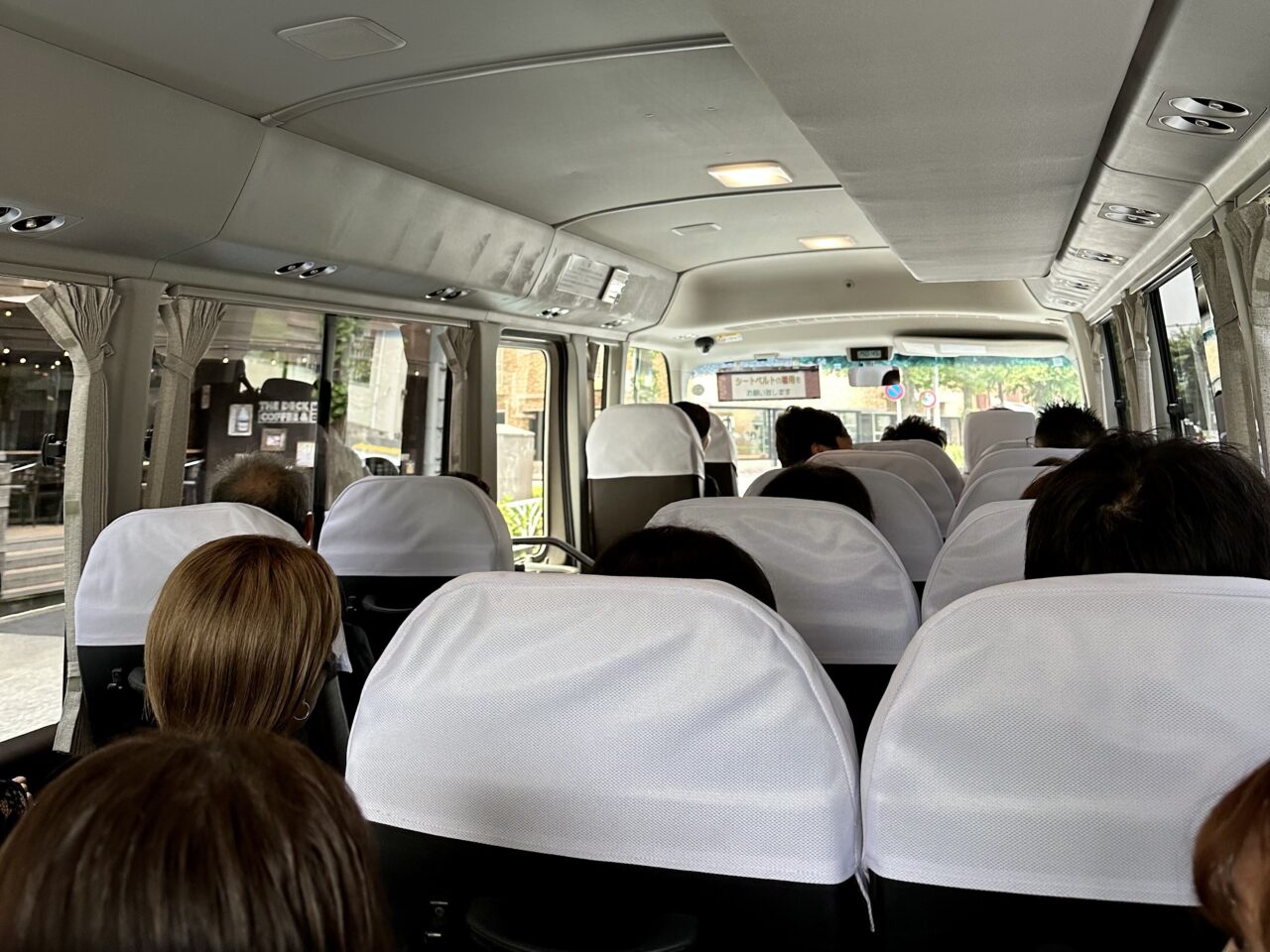
If the reception is at a different venue, the family has likely hired a private bus to whisk everyone to the next location. Upon arrival, you’ll place your gift money envelope in the designated spot, sign in again, probably receive a welcome drink, and here will be the sign-in activities and photos of the couple. Don’t worry about your checked coat and bag, they’ve brought them to the new venue.
Whether the building has changed or not, let’s enter the reception room. Head to your assigned seat; you’ll find your table number written somewhere, whether it’s in the wedding program or posted in the sign-in activities area.
The Reception
The wedding reception itself will vary greatly from weddings in the West. There may be mini-games throughout the reception, such as guessing things about the couple or which door they’ll enter the venue through. The reception will likely open with a video montage of the couple, showing some old photos and the like, and then showing some footage of their engagement photoshoot. I was really surprised that the video at one wedding I went to showed the couple in wedding attire at their engagement photo shoot, including the bride in a wedding dress, which is taboo in the US and maybe some other western countries. But that’s sort of the fun of it, seeing which practices are observed in Japan and which ones aren’t.
There absolutely won’t be dancing, but I thought the entertainment makes up for it. There will be lots of speeches from the bride and groom as well as close friends or colleagues. The couple will likely be mysteriously spirited away at some point in the reception for a wardrobe change, and the garb they’ll be wearing before and after the change will vary between a western white wedding dress, a colored evening dress (like prom), and a wedding kimono.
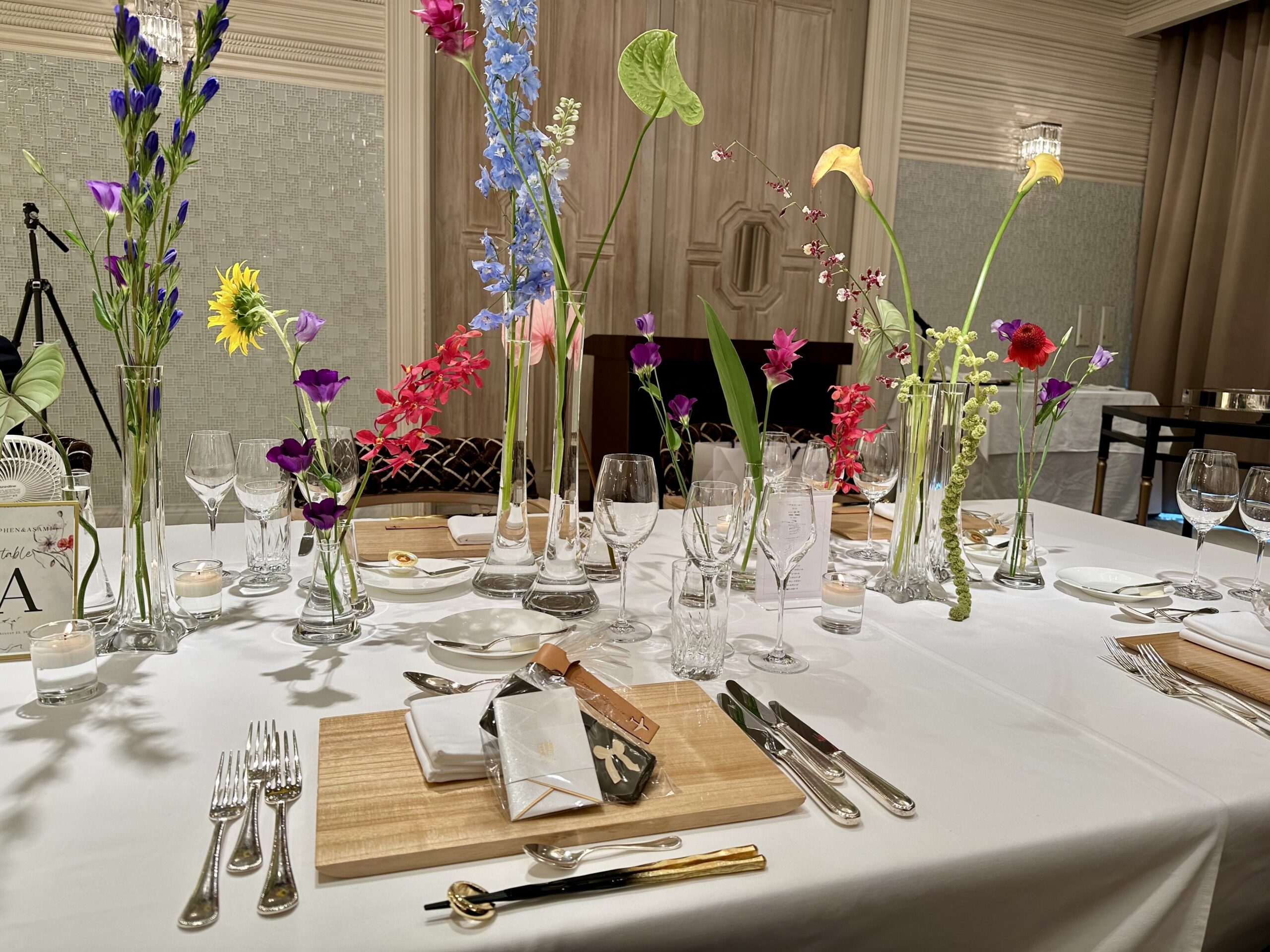
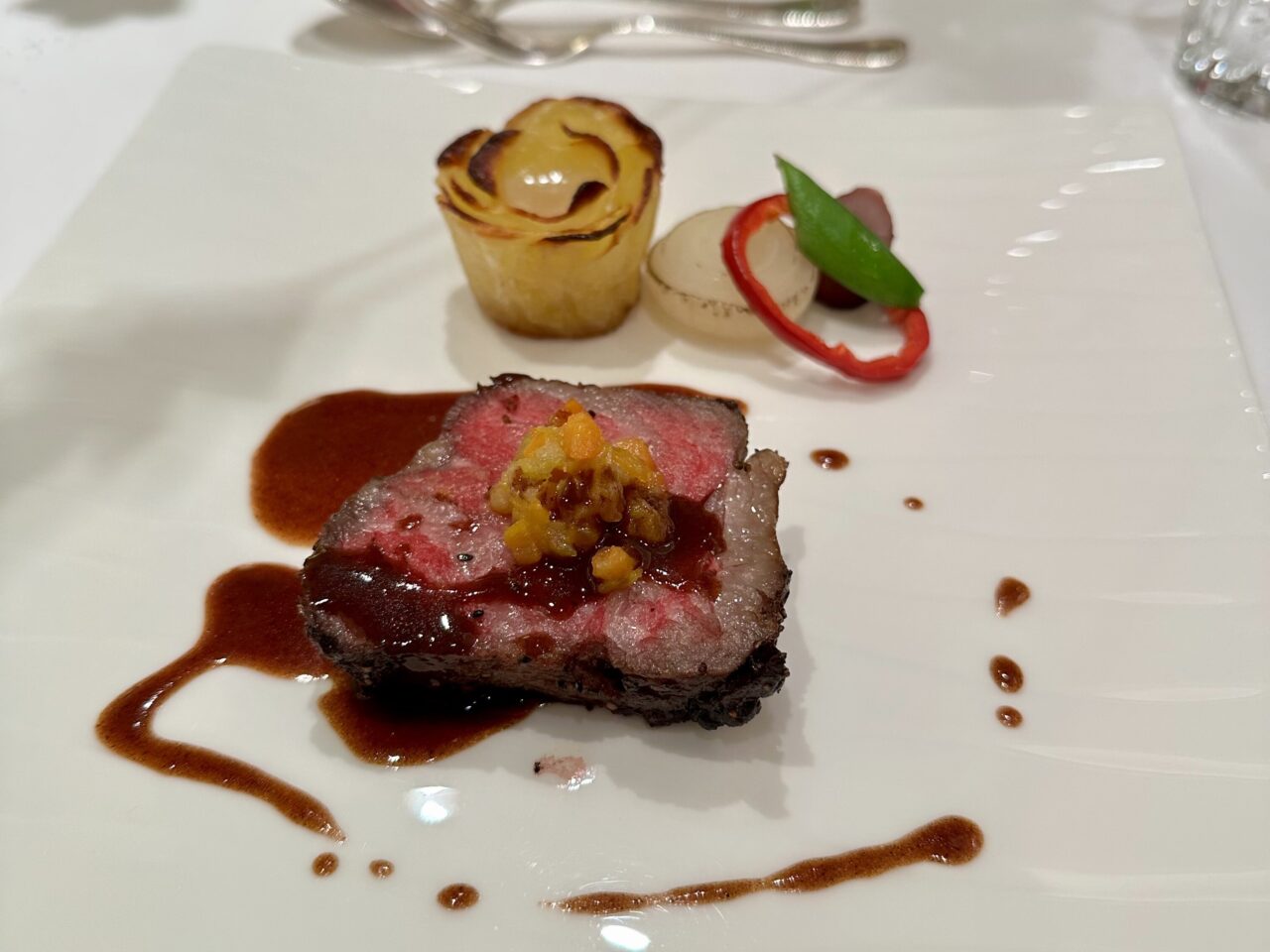
As for the food, it’s gonna be good. It will probably be served course-style, each dish being brought out at different intervals. Each plate may look small, but you’ll probably be full by the end, and they’ll be arranged as if you’re eating at a fancy city restaurant. The wedding cake will likely taste like an average Japanese cake. Drinks are probably free-flow, but there likely won’t be a bar, so you’ll have to call the waitstaff to bring you a drink from the menu.
The goings on of the day will be meticulously timed, with venue staff constantly hovering around the couple to help them if needed or to bark instructions about what time it is and where they need to go for the next thing to happen. This is really interesting to watch as an outsider, and it can even be a bit comical. Last time the staff was explaining in such excruciating detail about where and how deep to cut the cake, there was a voice inside my head yelling “Cut the darn cake!” Of course, I wouldn’t actually yell, because the accepted level of humor at a Japanese wedding is exponentially lower than in America, especially anything that could be taken as offensive (such as making fun of the ceremony or the bride or groom).
But that’s not to say all emotions are off-limits! It’s okay to cry, and many people will, especially during the speeches, touching videos, etc. But the emotion I have noticed is really amplified at Japanese weddings is gratitude. While American weddings are mostly about the couple (which isn’t bad, of course) and perhaps the family and wedding party, Japanese weddings seem to be much more about the guests. There’s a lot of effort put into thanking guests for coming to the wedding. At the first “Thank you for taking time out of your busy schedules” that was announced, I thought “Of course, you’re my close friend!” But after hearing things like that again and again throughout the day, I realized that this must be a theme. This gratitude can be felt with these direct words, in the entertainment planned throughout the day, and in the gifts you’ll take home (more on that below).
Ending the Day
The reception will likely end with a video montage of the wedding and reception… Yes, a video of that very same day! Those video editors must have a back room where they sweat bullets to crank out a thoughtful video of the day and try to include footage of all (or at least most) guests and some of the more touching scenes of the day.
Before you stand up, check under your seat for a wedding gift. You’ll probably receive a few tangible gifts that the couple selected for their guests, including a hand-written note from either the bride or groom (that might make you tear up later), and you’ll also receive a catalog (or redemption code for an online catalog) so that you can pick a gift to be delivered to your home. Note the expiration date on the catalog, probably 6 months from the wedding. I’ve also noticed that if you don’t live in Japan but traveled abroad for the ceremony, you may receive more physical gifts instead as the catalog gift likely cannot be redeemed overseas.
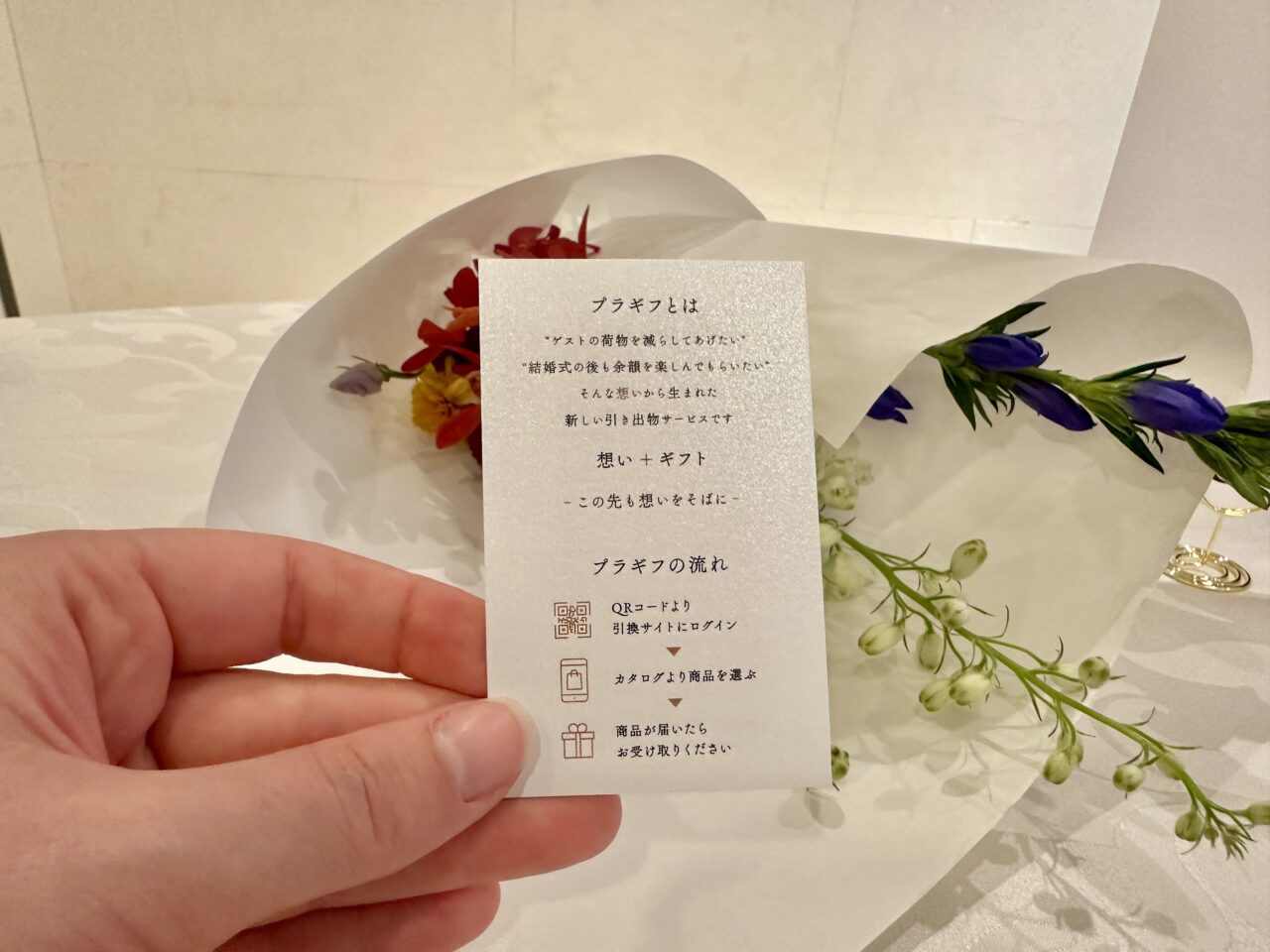
One nice treat is that on the way out, guests will likely be allowed to take home flowers from the table arrangements. This is a lovely touch to make sure the flowers go home to a nice environment rather than just the venue’s trash.
After-Party
If you know other people attending the wedding, the chances that you’ll be invited to an after-party (二次会 – niji-kai) are high, likely at a bar or restaurant somewhere. However, I went to a wedding where I didn’t know anyone else, so of course I didn’t have anyone to go partying with, and I just went home after.
You May Now…
Attend the wedding! You’re now armed with everything you need to know and more before attending a Japanese wedding. Just do the best you can with all these guidelines, and most importantly, have a wonderful time celebrating your friends and their love!
Life events like weddings often lead to a move. Aikagi helps English-speaking residents find and rent apartments across Tokyo, Kanagawa, Saitama, and Chiba.