
Rent Guarantor Companies in Japan: How They Work, What They Cost and How to Pass Screening (2026)

Quick answer: a rent guarantor company (家賃保証会社, yachin hoshō gaisha) promises the landlord that your rent will be paid. If you fall behind, the company pays the landlord and then collects the money from you. Most apartments in Tokyo require one, including for foreign residents who have no Japanese guarantor. The usual cost is an initial fee of about 50% of one month’s rent (the range is roughly 30% to 100%) plus about ¥10,000 a year to renew. The company runs its own screening, separate from the landlord’s, so it is worth knowing what it checks.
What Does a Rent Guarantor Company Do?
Japanese leases traditionally needed a personal guarantor (連帯保証人, rentai hoshōnin): usually a parent or relative living in Japan with a stable income, who signs to say they will pay if you do not. Most foreign residents do not have anyone like that, and many Japanese tenants no longer ask their families either. Guarantor companies fill that gap.
Using one was already standard more than ten years ago: an industry survey for fiscal 2014 found that about 56% of rental contracts used a guarantor company (source: Ministry of Land, Infrastructure, Transport and Tourism). In practice, the landlord or management company usually chooses the company, and you are asked to apply to it as part of your rental application. You normally cannot pick your own, but you can ask the agent whether there are alternatives if you are rejected.
How Much Does a Guarantor Company Cost?
Fees differ by company and plan, but a common structure is easy to estimate. The figures below are typical ranges from published industry information, not a verified 2026 national average: your actual fee depends on the company, the property and the plan.
| Fee | Typical amount |
|---|---|
| Initial guarantee fee | About 50% of one month’s rent is the setting most often cited in published industry information. Plans range from about 30% to 100%, and some have a minimum fee. |
| Annual renewal fee | About ¥10,000 a year from the second year is common. Some companies charge ¥12,000 to ¥20,000. |
| Monthly plans | Some plans charge a small monthly fee instead of, or as well as, the yearly renewal. |
| What “rent” means | Usually the total monthly payment, including the management or common-area fee (管理費・共益費), not just the base rent. |
Example: for a ¥80,000 apartment with a ¥5,000 management fee, a 50% plan costs about ¥42,500 when you move in and about ¥10,000 every year after that. Over a two-year lease, that is roughly ¥52,500 in total: the ¥42,500 initial fee plus one ¥10,000 renewal at the start of the second year, assuming no monthly charges or payment-processing fees. The fee is paid together with your other move-in costs; see our guide to Tokyo rent and move-in costs for the full list.
Before you apply, ask the agent:
- the initial guarantee fee, and whether a minimum fee applies
- whether there is a yearly renewal fee, a monthly fee, or both, and when the first renewal is due
- whether payment-processing or direct-debit fees are added
- what the fee is calculated on (base rent only, or rent plus management fee)
One example from a company that specialises in foreign residents: in a guide it published for universities in 2021, GTN listed an initial fee of 30% to 100% of total rent (minimum ¥15,000) and ¥10,000 a year from the second year, with support in English, Chinese, Korean, Vietnamese, Nepali and other languages (source: Shinshu University). Current prices may differ.
Japan has had a government registration system for rent guarantor companies since 2017, and the Ministry of Land, Infrastructure, Transport and Tourism lists registered companies that offer support in foreign languages (example entry, Japanese). If you are asked to use a company you have never heard of, it is reasonable to ask the agent whether it is registered.
What Are the Three Types of Guarantor Company, and What Does Each Check?
Which company your landlord uses matters, because they tend to look at different information. These are informal industry categories, not official ones: screening methods differ by company and product, and some companies use more than one kind of information.
| Type | What they usually check |
|---|---|
| Credit-card / consumer-credit companies (信販系) | Your record at credit bureaus such as CIC and JICC. Late payments on a credit card, a loan, or a smartphone bought in instalments can show up. Approval criteria still differ by company and product. |
| Companies in the LICC association (LICC系) | The association runs a shared database of cases where a member company had to pay rent on a tenant’s behalf, which members can check with the applicant’s consent. A past case like this with one member can affect an application to another. |
| Independent companies (独立系) | Mainly their own criteria and documents, such as income proof, employment and savings. Some are seen as more flexible, but standards and fees vary, and they are not automatically easier to pass. |
If you have just arrived in Japan, you probably have no credit history here at all. That is not the same as a bad history, and it does not stop you renting, but it does mean the company will lean more on your income, job and visa period.

Not sure what your guarantor company is asking for? Ask Aikagi. Send us your situation and get a written answer within five business days (¥5,000), or book a 45-minute online call (¥10,000). Sending your question is free; you pay only after we confirm we can help.
What Will the Guarantor Company Ask For?
- Your residence card (front and back) and passport
- Proof of work or study: employment certificate, offer letter, or student ID / admission letter
- Proof of income, such as recent payslips or last year’s withholding slip
- A Japanese phone number where they can reach you
- One or two emergency contacts. Many companies want one person living in Japan, of any nationality; some also want a family member abroad
Expect a phone call. The company may call you, your workplace or your emergency contact to confirm details, sometimes only in Japanese. Tell your emergency contact in advance that a call may come, and what it is about. If nobody answers, screening can be delayed while the company tries again.
You will need a Japanese phone number and usually a Japanese bank account for rent payments, so set them up first. Neither is a legal requirement for applying, and what is needed at application can differ from what is needed when the lease starts, but in my experience helping foreign residents rent, an application without a Japanese phone number and bank account usually cannot even go to screening.
Why Do Guarantor Companies Reject Applications?
- Income too low for the rent. A common rule of thumb is rent of about one third of monthly income or less. It is a screening habit, not a law, and companies differ on whether they look at gross or take-home pay.
- Past late payments. With credit-based companies, late payments on credit cards, loans or phone instalments can count. With LICC members, late rent with another member can count.
- Visa expiring soon or work still unconfirmed. A short remaining period of stay or a job that has not started yet raises questions.
- Could not be reached. Unanswered calls to you or your emergency contact can stall or end an application.
- Inconsistent information. Details that do not match between your application and your documents.
What Can You Do If the Guarantor Company Says No?
- Ask your agent whether the landlord would accept a different guarantor company. Because the types check different records, a rejection by one company does not mean all will say no.
- Look at buildings that use an independent or foreigner-focused company. Agents who regularly work with international tenants know which ones these are.
- Offer extra documents: savings statements, an employer letter, or a larger deposit if the landlord allows it.
- Ask whether your employer offers company-leased housing (社宅) or will act as guarantor. Some do.
- Consider a share house while you build a record. Most do not use a guarantor company; see our share house guide.
Why Does Paying on Time Matter for Your Next Move?
Rent paid through a guarantor company is often collected by direct debit. If a payment fails, the company pays the landlord, then contacts you to collect it. Late payments may be recorded and shared, which can make your next application harder. If you know you will be late, contact the company before the due date rather than after.
Rent Guarantor Companies: Frequently Asked Questions
Q Is a guarantor company required for foreigners in Japan?
For most apartments in Tokyo, yes, whatever your nationality. Some landlords accept a personal guarantor instead, but that person usually has to be a relative living in Japan with a stable income.
Q Is the guarantee fee refundable?
Generally no. Unlike a deposit, the guarantee fee is the price of the service, and once the guarantee has started it is not returned when you move out. If an application is cancelled before the lease or guarantee contract begins, how the fee is handled depends on the contract, so ask before you pay.
Q Can a friend in Japan be my guarantor instead?
Rarely as the main guarantor. A friend can often be your emergency contact, which is a different role: they are only contacted to reach you, and they do not pay your rent.
Q Does the guarantor company check my credit history from my home country?
Generally no. Japanese companies check Japanese records. If you have none yet, they rely on your income, employment and visa.
Q What is the difference between a guarantor and an emergency contact?
A guarantor (or guarantor company) pays the landlord if you do not. An emergency contact is only someone the company or landlord can call if they cannot reach you.
Fees and screening rules change, and every company sets its own. Treat the figures here as typical, and confirm the actual plan with your agent before you apply. We are not lawyers or financial advisers.

How to Find Your Ideal Rental in Tokyo
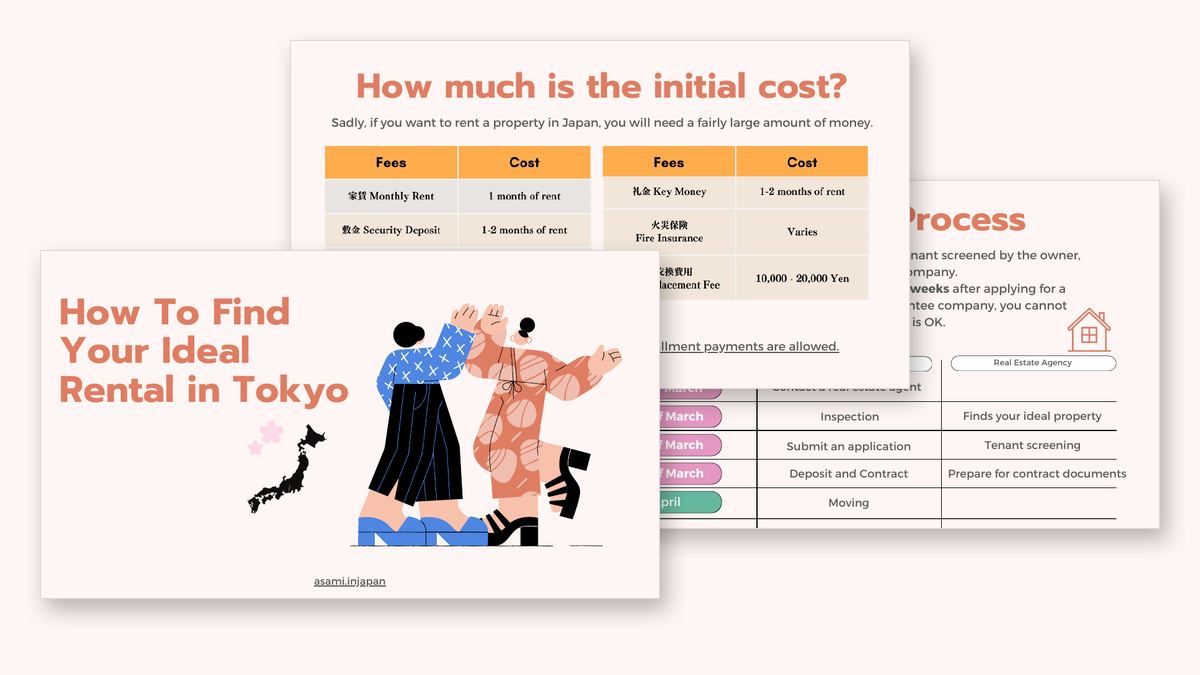
A 15-page guide by Aikagi: the move-in schedule week by week, the documents you need to apply, and what the initial costs add up to (updated October 2026). Add Aikagi on LINE and we’ll send it to you for free.
Looking for an apartment in Japan?
Worried about the guarantor company?
Aikagi helps foreign residents find apartments in plain English. We check with landlords before you visit and explain your situation in a way the landlord and the guarantor company can assess.