
Managing finances in Japan: Opening a bank account and sending money abroad

To open a bank account in Japan as a foreigner, you usually need your residence card, an address registered at your city office, and a Japanese phone number; some banks also ask for a personal seal (inkan) and proof of work or study. Some banks are reluctant to open accounts for people who have been in Japan for less than six months, although employees of Japanese companies are usually treated as residents from their first day. Below: which banks to try, the steps at the branch or online, and the cheapest ways to send money home. Japan’s Financial Services Agency also publishes a multilingual guide to bank accounts and sending money.
“How can I open a bank account in Japan as a foreigner? What’s the best way to send money back home without losing a fortune in fees?”
Many expats in Japan find themselves grappling with these questions. The good news is that with the right information and approach, managing your finances in Japan can be straightforward and cost-effective.
In this article, we’ll guide you through the process of opening a Japanese bank account as a foreigner, explore the most efficient ways to transfer money internationally, and provide essential tips for navigating the Japanese banking system. Whether you’re a new English teacher in Tokyo or an experienced expat looking to optimize your financial management, this guide will help you take control of your finances in Japan.
How to Open a Bank Account in Japan as a Foreigner
Understanding Japanese Banking Requirements
Essential Documents Needed
When opening a bank account in Japan as a foreigner, it’s crucial to be well-prepared with the necessary documentation. The most important document you’ll need is your residence card (在留カード, zairyu card). This card serves as proof of your legal status in Japan and is essential for most official procedures, including banking.
In addition to your residence card, you’ll typically need to provide:
- Your passport
- A residence status that meets the bank’s rules (see the six-month rule below)
- Proof of address, such as a utility bill or your residence certificate (住民票, juminhyo)
- Your personal seal (印鑑, inkan) or signature
Some banks may also require additional documents, such as:
- Proof of employment or student status
- Your My Number card or notification (個人番号, kojin bangou)
Residency status and the six-month rule
Many Japanese banks follow the resident/non-resident distinction in the Foreign Exchange and Foreign Trade Act. People who have been in Japan for less than six months are generally treated as non-residents, unless they work for an office or employer in Japan. Each bank sets its own rules on top of this, covering your residence card, the remaining period of stay, your job and the documents it accepts. If you have just arrived, check the bank’s requirements for foreign nationals before you go.
Choosing the Right Bank for Your Needs
Selecting the right bank is a crucial step in your financial journey in Japan. As an expat, you’ll want to consider factors such as:
- English support: Some banks, like SBI Shinsei Bank and SMBC Prestia, offer more extensive English-language services.
- International transfer options: If you frequently send money abroad, look for banks with competitive exchange rates and transfer fees.
- ATM accessibility: Consider banks with a wide network of ATMs or those that offer free withdrawals from other banks’ ATMs.
- Online and mobile banking: Check if the bank offers robust digital services, which can be especially helpful if you’re not fluent in Japanese.
- Minimum balance requirements: Some banks may require you to maintain a minimum balance to avoid fees.
Which bank should you check first?
Your options depend on how long you have lived in Japan, whether you work for a Japanese employer, your remaining period of stay and the ID the bank accepts. Rather than assuming every bank follows the same six-month rule, compare each bank’s official requirements, and check whether you must apply online, by post or at a branch.
Popular banks among expats include:
- SBI Shinsei Bank (formerly Shinsei Bank): Known for its English services; ATM fees depend on your account tier
- SMBC Prestia: Offers extensive English-language banking. As of October 2026, foreign nationals must apply in person at a branch by appointment, because the bank checks residence status and the period of stay
- Japan Post Bank: Has the largest ATM network in Japan
- Mizuho Bank: Provides a good balance of services and has many branches
Step-by-Step Guide to Opening an Account
Visiting a Bank Branch
- Prepare your documents: Gather all the necessary documents mentioned earlier.
- Choose a branch: Select a branch of your chosen bank, preferably one with English-speaking staff if needed.
- Visit during business hours: Most banks operate from 9 AM to 3 PM on weekdays. Avoid busy times like lunch hours or month-ends if possible.
- Fill out the application form: You’ll be given an application form to complete. Some banks may have English versions available.
- Provide your information: You’ll need to provide personal details, including your name, address, phone number, and occupation.
- Choose your services: For everyday banking, most people open an ordinary deposit account (普通預金口座, futsū yokin kōza). Depending on the bank, you can also apply for a cash card, a debit card or online banking.
- Verification process: The bank staff will verify your documents and information.
- Initial deposit: Make your initial deposit if required.
- Receive your bank book and card: Some banks hand you a paper bank book (通帳, tsūchō) on the spot, while others, especially online banks, only provide digital account details. Your cash card is often mailed to you later.
Online Banking Options
While most traditional Japanese banks require an in-person visit to open an account, some newer digital banks offer online account opening processes. These can be more convenient for expats, especially those with limited Japanese language skills. Some options include:
- Sony Bank: Offers English-language banking, but foreign nationals apply by post rather than through the app, and must show they have lived in Japan for at least six months.
- Rakuten Bank: Provides a fully online application, though the interface is primarily in Japanese.
- PayPay Bank (formerly Japan Net Bank): Accepts online applications; check its ID and language requirements for foreign residents before applying.
When opening an account online, you’ll typically need to:
- Fill out an online application form
- Upload scans or photos of your required documents
- Verify your identity through a video call or by submitting additional documentation
- Wait for approval and receive your account details electronically
Common Challenges Faced by Foreigners
While opening a bank account in Japan has become easier for foreigners in recent years, you may still encounter some challenges:
- Language barrier: Not all banks have English-speaking staff or English documentation.
- Visa restrictions: Some banks may not open accounts for those on short-term visas.
- Address requirements: You typically need a fixed address in Japan to open an account.
- Limited credit options: As a newcomer, you may have limited access to credit cards or loans initially.
- Cultural differences: Japanese banking practices may differ from what you’re accustomed to, such as the use of personal seals (inkan) instead of signatures.
- Technological gaps: Some Japanese banking systems may seem outdated compared to more digitally advanced countries.
To overcome these challenges, consider:
- Bringing a Japanese-speaking friend to assist with communication
- Researching foreigner-friendly banks beforehand
- Being patient and prepared with all necessary documents
- Familiarizing yourself with Japanese banking customs and etiquette
By understanding these requirements and potential challenges, you’ll be well-prepared to navigate the process of opening a bank account in Japan as a foreigner. Remember, while it may seem daunting at first, many expats successfully manage their finances in Japan every day. With the right preparation and approach, you’ll soon have a functional Japanese bank account to support your life in this fascinating country.
Why your bank account matters when you rent an apartment
In my experience helping foreign residents rent apartments, an application without a Japanese bank account and phone number usually can’t even go to screening, because rent and the guarantor company’s fees are usually paid by direct debit from a Japanese account. A few agencies accept applicants who are still setting these up, but they have far fewer apartments to offer. Open your account first, then start viewing apartments. Our guide to renting in Tokyo as a foreigner explains the rest of the screening.
How to Make International Money Transfers from Japan

As an expat living in Japan, you may often need to transfer money internationally, whether it’s to pay bills back home, support family, or manage investments. Understanding your options and how to optimize your transfers can save you significant money over time.
Comparing Transfer Services
Bank Transfers vs. Online Transfer Services
When it comes to sending money abroad from Japan, you generally have two main options: traditional bank transfers and online money transfer services.
Traditional Bank Transfers: Japanese banks like MUFG, Mizuho, and SMBC offer international wire transfers. These are typically:
- Reliable and secure
- Suitable for large amounts
- Often more expensive due to higher fees and less favorable exchange rates
- Can be slower, sometimes taking 3-5 business days
Online Transfer Services: Popular options include TransferWise (now Wise), OFX, and PayPal. Depending on the destination, currency and amount, these services may offer:
- More competitive exchange rates
- Lower fees, especially for smaller amounts
- Faster transfers, sometimes within 1-2 business days
- User-friendly interfaces, often with mobile apps
- The ability to set up transfers in advance or automate regular payments
The best choice depends on your specific needs, the amount you’re transferring, and the frequency of your transfers.
Evaluating Fees and Exchange Rates
When comparing services, it’s crucial to look at both fees and exchange rates:
Fees: These can include:
- Sending fees
- Receiving fees (sometimes charged by the recipient’s bank)
- Intermediary bank fees (for traditional bank transfers)
Exchange Rates: This is where many providers make their profit. Always compare the offered rate to the mid-market rate (which you can find on sites like XE.com or Google Finance).
To truly understand the cost of your transfer, calculate the total amount that will arrive in the recipient’s account after all fees and exchange rate margins are applied.
How to compare international transfers from Japan
Compare the amount your recipient will actually receive, not just the advertised fee. For example, if you are sending ¥100,000, check each provider for:
- the destination country and the currency your recipient gets
- the exchange rate offered, compared with the mid-market rate
- the transfer fee and any receiving or intermediary bank charges
- the estimated amount delivered and how long it takes
- whether your residence status and ID meet the provider’s requirements
Get quotes for the same amount, currency and day. The cheapest option changes depending on where the money is going and how it is paid out.
Tips for Reducing Transfer Costs
Timing Your Transfers
Exchange rates fluctuate constantly due to various economic and political factors. While it’s impossible to predict exact movements, you can potentially save money by:
- Monitoring rates: Use apps or set up alerts to track exchange rates.
- Understanding trends: Research factors that might affect the JPY and your target currency.
- Considering forward contracts: Some services allow you to lock in a rate for future transfers if you believe the rate is favorable.
Utilizing Promotional Offers
Many transfer services offer promotions to attract new customers or reward loyal ones:
- Sign-up bonuses: Some services offer fee-free transfers or better rates for your first transfer.
- Referral programs: You might get bonuses for referring friends to the service.
- Volume discounts: Some providers offer better rates or lower fees for larger transfers.
- Regular user perks: Frequent users might qualify for premium accounts with better terms.
Additional Tips:
- Batch transfers: If possible, combine smaller transfers into larger ones to potentially benefit from better rates and lower fees.
- Compare regularly: The best service for you might change over time as providers update their offerings.
- Consider multi-currency accounts: Some online services offer accounts that can hold multiple currencies, allowing you to transfer when rates are favorable.
By understanding your options and implementing these strategies, you can significantly reduce the cost of sending money abroad from Japan, ensuring more of your hard-earned yen reaches its intended destination.
Japanese Bank Fees, ATMs and Online Banking
As an expat in Japan, understanding the intricacies of the Japanese banking system is crucial for effective financial management. While it may seem daunting at first, with the right knowledge, you can navigate it smoothly and make the most of the services available.
Understanding Banking Fees and Charges
Common Fees to Watch Out For
Japanese banks typically charge various fees that might differ from what you’re accustomed to in your home country:
- Account Maintenance Fees: Most ordinary deposit accounts in Japan have no monthly fee, but some account types and banking packages charge one or require a minimum balance.
- ATM Fees: Using ATMs outside of business hours or using ATMs from other banks often incurs fees. These often range from about ¥110 to ¥220 per transaction, but they vary by bank, ATM network, time of day and account tier, and some withdrawals are free.
- Transfer Fees: Domestic transfer fees vary by bank and method; online transfers are often cheaper than transfers at the counter, and some accounts include free transfers each month. International transfers can be significantly more expensive.
- Inactivity Fees: Some banks charge a fee on accounts that meet their own inactivity conditions, with the period and exemptions set by each bank. This is separate from Japan’s dormant-deposit rules, which apply to accounts with no transactions for 10 years.
- Cash Card Reissuance Fee: If you lose your cash card, banks usually charge a replacement fee, often around ¥1,000, depending on the bank.
How to Avoid Unnecessary Charges
To minimize banking costs in Japan:
- If your account has a minimum balance requirement, keep the required amount in it to avoid any fees.
- Use your bank’s ATMs during business hours to avoid extra charges.
- For recurring payments, check whether your bank offers free or discounted scheduled transfers, or direct debit; automatic transfers do not always remove transfer fees.
- Use online banking for transfers when possible, as it’s often cheaper than in-branch services.
Utilizing Japanese ATM and Online Banking Services
ATM Networks and Access
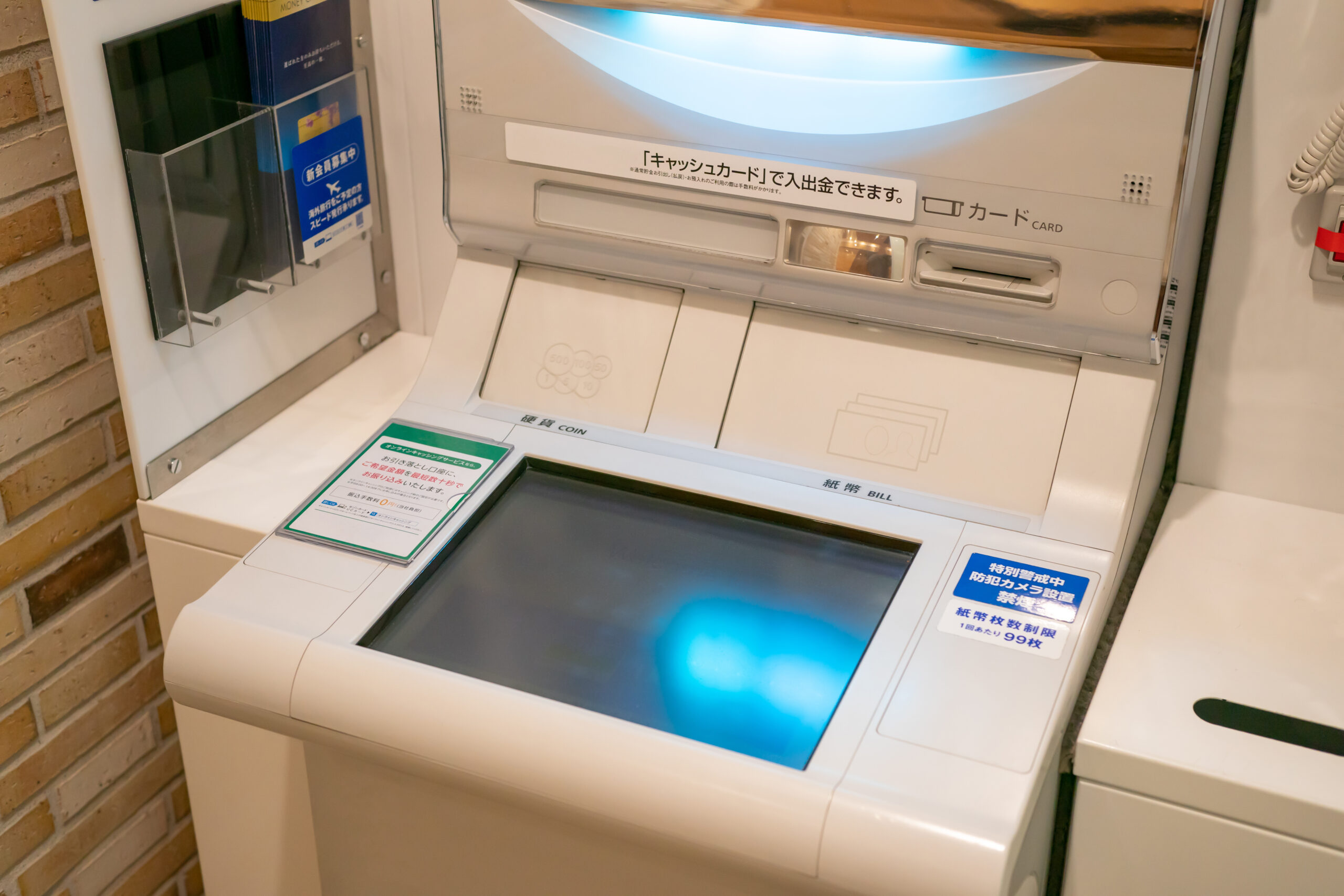
Japan has an extensive ATM network, but there are some peculiarities to be aware of:
- Operating Hours: Many ATMs, especially those in banks, have limited operating hours. Hours vary by location, bank and service: some branch ATMs have limited hours, while many convenience store ATMs run late or around the clock.
- Convenience Store ATMs: ATMs in convenience stores like 7-Eleven, Lawson, or FamilyMart often have extended hours and are foreigner-friendly.
- International Cards: Not all ATMs accept international cards. Look for ATMs with the “International ATM Service” sign, often found in post offices, 7-Eleven stores, and some major banks.
- Withdrawal Limits: ATM withdrawal limits vary by bank, card type, ATM network and your account settings, and limits for overseas-issued cards can differ from those for Japanese accounts. Check your bank’s daily limit and the ATM’s per-transaction limit before you withdraw cash.
- IC Card Integration: Japanese banks issue cash cards for ATM withdrawals and deposits, and some also offer debit cards or cards with payment functions. An IC chip on a cash card does not necessarily mean you can use it for purchases, so check what your card supports.
Setting Up Online Banking
Online banking in Japan has improved significantly in recent years, offering convenience for expats:
- Registration Process: Some banks activate online banking when you open your account, while others need a separate registration; login setup may be done in an app, online or by post.
- Security Measures: Japanese banks often use additional security measures like one-time passwords sent via SMS or generated by a physical device.
- Language Options: While many major banks now offer English interfaces for online banking, the depth of English support can vary.
- Mobile Apps: Most major banks offer smartphone apps for convenient banking on the go. English support in these apps varies: some offer English screens, while others work mainly in Japanese.
- Features: Common online banking features include account balance checks, domestic transfers, utility bill payments, and sometimes international transfers.
- Push Notifications: Many banking apps offer real-time notifications for transactions, helping you stay on top of your finances.
To make the most of online banking:
- Keep your login details and passwords secure.
- Familiarize yourself with your bank’s specific online platform.
- Set up automatic payments for regular bills to save time and avoid late fees.
- Regularly check your transaction history to monitor your spending and detect any unusual activity.
By understanding these aspects of the Japanese banking system, you can manage your finances more effectively, avoid unnecessary fees, and take advantage of the convenience offered by Japan’s banking infrastructure.
Key Takeaways

Navigating the Japanese banking system as an expat can seem daunting at first, but with the right knowledge and preparation, it becomes manageable. Remember to choose a bank that caters to your specific needs as a foreigner, be prepared with all necessary documents when opening an account, and familiarize yourself with the fees and services available. When making international transfers, compare options to find the most cost-effective method. Always be mindful of Japanese business etiquette in your banking interactions. By following these guidelines and continuously educating yourself about local financial practices, you’ll be well-equipped to manage your finances effectively during your stay in Japan.
Bank Accounts in Japan: Frequently Asked Questions
What are the best banks for foreigners in Japan?
SBI Shinsei Bank and SMBC Prestia offer English-language banking, although their account-opening rules differ. Japan Post Bank has the largest branch and ATM network and provides guidance in several languages, but you may still need some Japanese at the counter. However, the best choice depends on your specific needs, location, and length of stay in Japan.
How long does it take to open a bank account in Japan?
It depends on the bank and the method. A branch visit with all your documents can take an hour or more, while online and postal applications need extra identity checks. Receiving your cash card and online banking details can take from several days to a couple of weeks.
Are there any online-only banks suitable for expats?
Yes. Rakuten Bank and PayPay Bank accept online applications, and Sony Bank accepts applications by post from foreign residents who have lived in Japan for at least six months. However, ensure you meet their specific requirements for foreign residents.
How often should I monitor exchange rates for money transfers?
If you’re making regular transfers, checking rates weekly is a good practice. For large, one-time transfers, you might want to monitor rates more closely for a month or two to find the best time to transfer.
What should I do if I encounter issues with my Japanese bank account?
First, try to resolve the issue with your local branch, preferably with an English-speaking staff member if available. If the problem persists, consider contacting the bank’s customer service line or seeking assistance from expat communities or your embassy for guidance.
Opening a bank account in Japan?
Planning a move to Japan, or looking for an apartment here?
Aikagi helps foreign residents find apartments and settle in, in plain English.