
Moving to Tokyo: What You Can Do Before You Arrive, and What Has to Wait (2026)
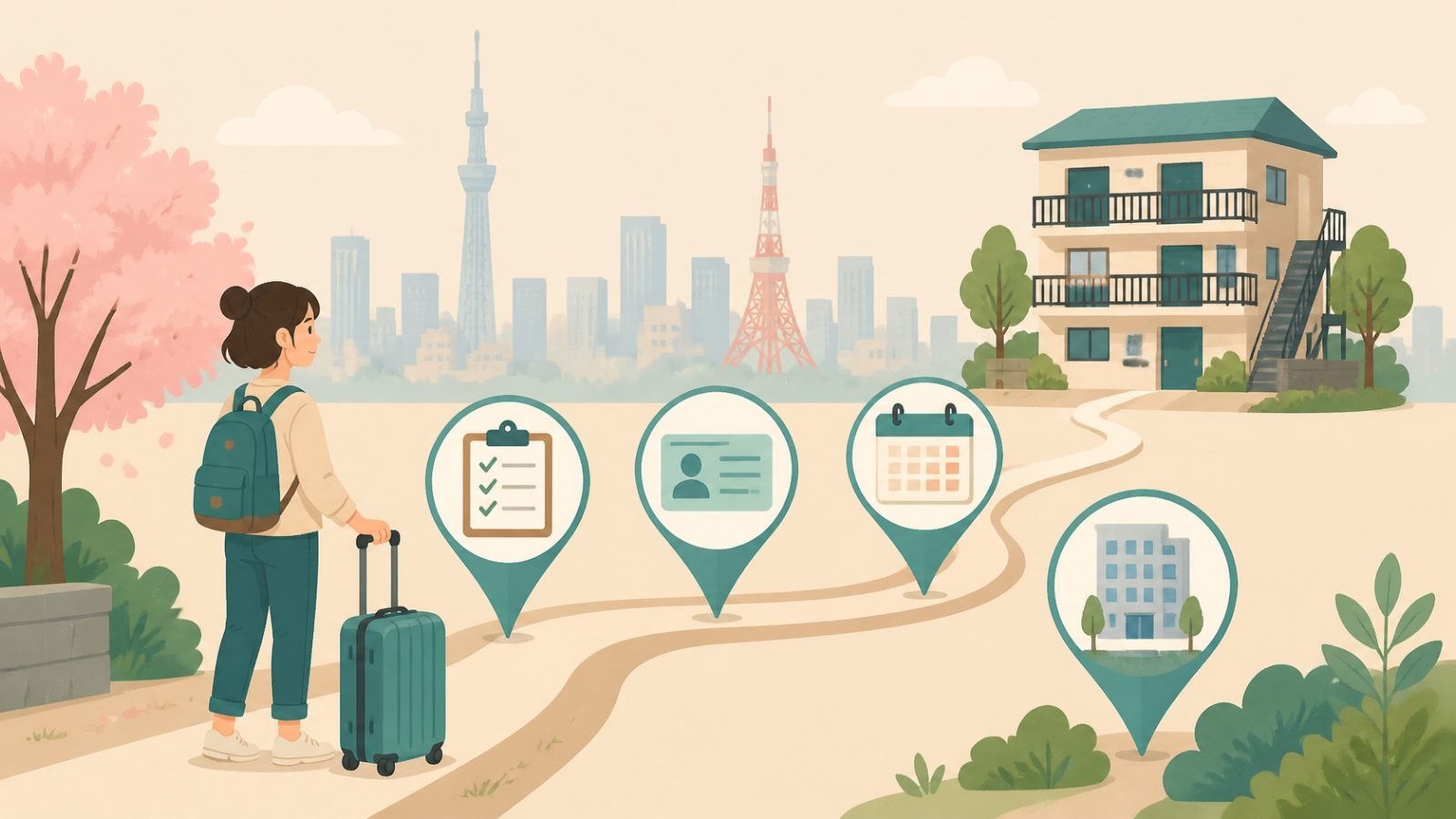
Quick answer: in most cases you cannot sign a lease for an apartment in Japan before you arrive. Landlords and rent guarantor companies screen you with things you only have after landing: a residence card (zairyū kādo), a resident record (jūminhyō) from your city office, a Japanese phone number and usually a Japanese bank account. What you can do from abroad is everything around the lease: set a budget, narrow down areas, book a first place to stay where you can register your address, and get your documents ready. Once you land, the search itself moves quickly. In our experience, it takes about two weeks from application to move-in at the earliest.
This guide covers what to prepare before you fly, what has to wait until you are in Japan, and a realistic timeline for your first month.
Why You Usually Can’t Rent an Apartment in Japan From Abroad
Renting in Japan is not only about the landlord saying yes. Most rentals also require a rent guarantor company, and both check who you are and whether you can pay. For that, they ask for:
- Your residence card. It shows your status of residence and how long you can stay. If you land at Narita, Haneda, Chubu, Kansai, New Chitose, Hiroshima or Fukuoka airport, it is issued at the airport. At other ports, it is mailed to you after you register your address.
- Your resident record (jūminhyō). The city or ward office creates it when you register your address, and you can get a copy there.
- A Japanese phone number. The guarantor company calls you to confirm your identity.
- A bank account. Rent is usually paid by bank transfer or direct debit.
With most landlords, an application cannot go forward without these. A small number of properties and management companies do accept applications from abroad, but they are limited, and most landlords will not move to a final contract until you have your residence card. That is why, in most cases, the contract has to wait until you are in Japan.
One exception: if your employer provides company housing or signs the lease in the company’s name, your home may be arranged before you arrive. Ask your employer whether that applies to you. The rest of this guide is for people renting on their own.

What You Can Do Before You Arrive
1. Set a realistic budget
Guarantor companies usually look for rent of about one third of your monthly income. The initial costs, including deposit, key money, agency fee, guarantor fee and the first month’s rent, typically add up to four to six months’ rent, paid in one go with no installments. Plan for two costs at the same time: your temporary stay and the move-in costs for the apartment. For rents by area and a breakdown of move-in costs, see our guide to renting in Tokyo.
2. Narrow down areas and your commute
Decide where you will work or study first, then look at areas within a commute you can live with. You can check market rents by station on SUUMO, the largest rental listing site in Japan. Knowing your area and budget before you land means you can start viewing apartments in your first week. If you are not sure what kind of home fits you, our guide to housing types in Japan explains the options.
3. Book a first place where you can register your address
You must register your address at the city or ward office within 14 days of deciding where you live, and a hotel cannot be used as your address. For your first weeks, choose a monthly apartment or a share house that says address registration is allowed. An Airbnb can also work, but ask the host before you book whether you can register the address there.
4. Get your documents ready
- Your passport and the documents for your visa
- Proof of income: an employment contract or offer letter showing your salary, or for students, proof of savings or a scholarship
- An emergency contact. This can be a family member, friend or co-worker. It is not a financial guarantor; landlords simply want someone they can reach if there is a problem with the apartment.
5. Arrange a phone number for day one
Some plans let you set up a Japanese number before you fly, so it works the day you land. The guarantor company will call that number during screening. Our guide to getting a Japanese phone number compares the options.
6. Talk to an agent online
You cannot sign from abroad, but you can talk. Explain what you are looking for, hear what is realistic for your budget and area, and you will be ready to view and apply in your first week. We suggest getting in touch about two months before you move.
Planning your first month in Tokyo and not sure what to do in which order? Ask Aikagi. Send us your situation and get a written answer within five business days (¥5,000), or book a 45-minute online call (¥10,000). Sending your question is free; you pay only after we confirm we can help.
What Has to Wait Until You Land
These steps happen in Japan, roughly in this order:
- Receive your residence card at the airport, or later by mail if you land elsewhere. Airport procedures when entering Japan explains what happens on arrival.
- Register your address at the city or ward office of your temporary home, within 14 days of deciding where you live. Bring your residence card. If you have not registered within 90 days of landing and have no valid reason, this can be grounds for revoking your status of residence.
- Get a copy of your resident record (jūminhyō) at the same office.
- Set up your phone and open a bank account.
- View apartments and apply. Rentals in Tokyo go on a first-come, first-served basis, so apply as soon as you find one you like.
- Wait for screening by the guarantor company and the landlord. For foreign applicants this often takes around a week to 10 days; in our experience, about 10 days at the shortest. See how guarantor companies work.
- Pay the initial costs by the deadline the agency sets. In our cases, this is usually about three days after approval.
- Sign the contract and move in. Then register your new address within 14 days.
A Realistic Timeline for Your First Month
If you arrive with your budget, area and documents ready, a first month can look like this:
| When | What happens |
|---|---|
| Before you fly | Set your budget, narrow down areas, book a first place where you can register your address, prepare documents, arrange a phone number |
| Week 1 | Receive your residence card, register your address at the city or ward office, get a copy of your resident record, open a bank account, start viewing apartments |
| Week 2 | Apply for the apartment you want; screening by the guarantor company and the landlord begins |
| Week 3 | Screening result (in our experience, about 10 days at the shortest); pay the initial costs by the agency’s deadline (usually about three days after approval in our cases); sign the contract |
| Week 4 | Move in, then register your new address within 14 days |
This is the fastest case. Screening can take longer if documents are missing or the guarantor company cannot reach you, and the January to March moving season is busier.
Common Mistakes to Avoid
- Staying only in a hotel for your first weeks. A hotel is fine for a few nights, but you cannot register it as your address, so registration and everything after it waits until you move somewhere you can register.
- Budgeting only for the apartment. You will pay for your temporary stay and four to six months’ rent in initial costs at around the same time.
- Waiting to decide. A good apartment in Tokyo rarely stays empty for long. Some people apply without a viewing for this reason.
- Trying to negotiate the initial costs. Pushing hard on the move-in costs can lead the landlord to choose another applicant.
Renting in Japan Before You Arrive: Frequently Asked Questions
Q Can I rent an apartment in Japan before I arrive?
Usually not if you are renting on your own. Screening needs your residence card, resident record, a Japanese phone number and often a bank account, which you only have after landing. A few properties accept applications from abroad, but most landlords will not sign until you have a residence card. Company housing arranged by your employer is the main exception.
Q Can I register a hotel as my address in Japan?
No. Register the place where you actually live. A monthly apartment or share house that allows address registration is the safest choice for your first weeks. If you use an Airbnb, ask the host first.
Q How soon can I move into an apartment after arriving in Japan?
In our experience, about two weeks after you apply at the earliest. Add a few days at the start to register your address, get your resident record and open a bank account.
Q Do I need a Japanese guarantor to rent an apartment?
Usually not. Most landlords use a rent guarantor company instead, and you pay a fee for it. You will still need an emergency contact.
About this guide
This guide is based on official information from the Immigration Services Agency of Japan: its guide to entry and residence procedures (residence cards issued at airports; registering your address within 14 days), its page on revocation of status of residence (Immigration Control Act, Article 22-4), and its guidance on not registering an address within 90 days (in Japanese).
How to Find Your Ideal Rental in Tokyo
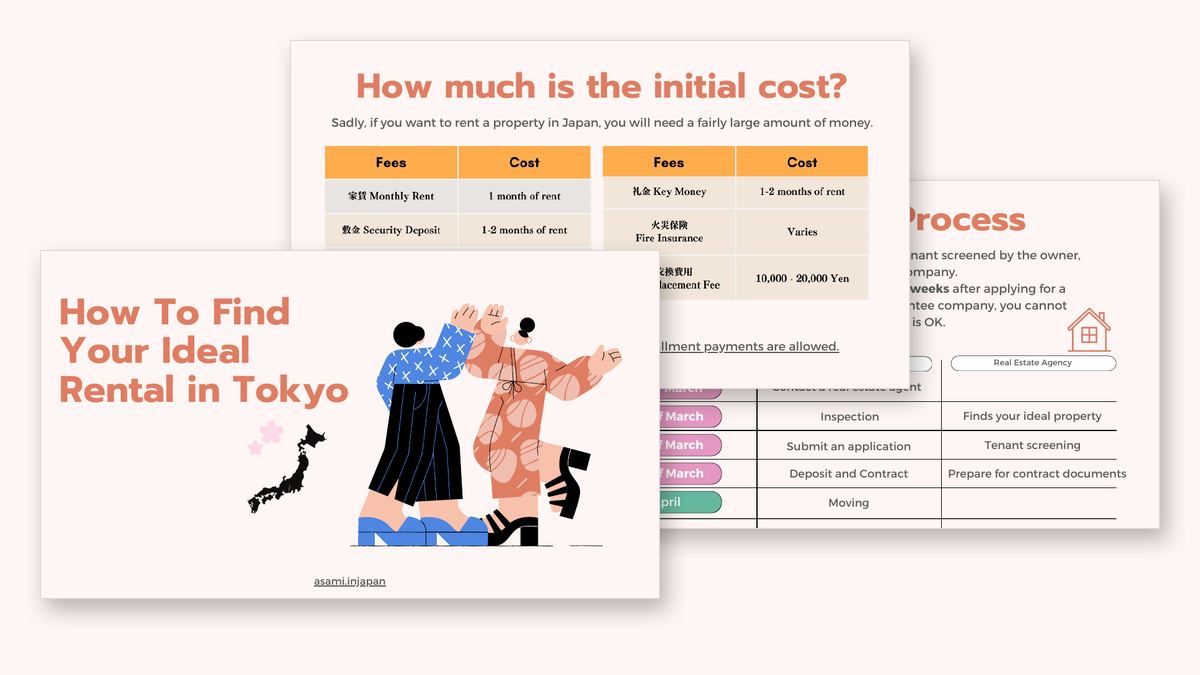
A 15-page guide by Aikagi: the move-in schedule week by week, the documents you need to apply, and what the initial costs add up to (updated October 2026). Add Aikagi on LINE and we’ll send it to you for free.
Moving to Japan soon?
Not sure what to do first?
Aikagi helps foreign residents find apartments and settle in, in plain English. Tell us your move date, budget and where you will work or study, and we will help you plan the first month.