
Moving Out of an Apartment in Japan: Deposit Refunds, Cleaning Fees and Garbage (2026)
Quick answer: when you move out of a rented apartment in Japan, you give notice (usually one month in advance, but check your contract), cancel utilities, get rid of everything you own, and attend a move-out inspection. The landlord then deducts the cost of any damage you caused, plus any cleaning fee your contract clearly sets, from your deposit and returns the rest. Under Japanese law you do not pay for normal wear and tear, such as sun-faded wallpaper or dents from furniture. In my experience, the two things tenants and landlords argue about most at move-out are cleaning and garbage, so this guide spends most of its time on those.
Legally, the landlord’s duty to return the deposit arises once the lease has ended and you have handed the apartment back. The landlord can deduct what you still owe under the lease, such as unpaid rent and valid repair or cleaning charges, and must return the rest (Civil Code Article 622-2). The law does not set a fixed number of days for the refund.
What Happens When You Move Out of a Japanese Apartment?
Most moves follow the same order. Start about two months before your move-out date if you can.
| When | What to do |
|---|---|
| 1–2 months before | Read your contract for the notice period (解約予告, often one month; sometimes two) and the cleaning clause. Give written notice to the management company. |
| 3–4 weeks before | Book bulky garbage collection (粗大ごみ) with your city. Popular dates fill up, especially in March. Arrange recycling for large appliances. |
| 2 weeks before | Tell the electricity, gas, water and internet companies your last day. Return any rented router. |
| Final week | Empty the room completely, clean it, and take dated photos of every room. |
| Move-out day | Attend the inspection (立会い, tachiai) with the management company, return all keys, and give a forwarding address and bank account for the refund. |
| After moving out | Receive the settlement statement (精算書) showing deductions. Many landlords return the balance within about a month, but timing depends on the contract. |
Rent usually runs until the end of the notice period, not the day you leave, so giving notice late can cost you an extra month. For setting up and cancelling utilities, see our utilities guide.
What Do You Pay For, and What Does the Landlord Pay For?
Since the Civil Code was revised in April 2020, the law states clearly that a tenant does not have to restore normal wear and tear or ageing (Article 621). You pay for damage caused by your carelessness or misuse. The Ministry of Land, Infrastructure, Transport and Tourism (MLIT) publishes guidelines with examples that landlords, agents and courts commonly refer to.
| Usually the landlord’s cost | Usually the tenant’s cost |
|---|---|
| Wallpaper faded by sunlight | Cigarette stains and smell |
| Dents in the floor from furniture | Nail and screw holes in walls |
| Small pin holes from posters or calendars | Scratches and smell from pets |
| Dark marks on the wall behind a fridge or TV | Damage from not cleaning, such as built-up grease or mould you let spread |
| General professional cleaning after you leave (unless your contract clearly says otherwise) | Things you broke or lost, such as a cracked mirror or a missing key |
Even when you did damage something, you do not always pay for a brand-new replacement. The guidelines use a six-year depreciation period for wallpaper as a reference when working out a tenant’s share, so the older the wallpaper, the smaller your share tends to be. That does not automatically remove every charge after six years: the repair method, labour cost, how much was damaged and the individual circumstances can still affect the amount.
Example: How a Deposit Refund Is Calculated
Suppose your deposit is ¥100,000. Your contract includes a ¥35,000 move-out cleaning fee that was explained when you signed, and you still owe ¥10,000 in rent for the last month. With no other valid deductions, the refund would be ¥100,000 − ¥35,000 − ¥10,000 = ¥55,000. If a cigarette-stained wall also needed new wallpaper, part of that cost could be deducted too, depending on how old the wallpaper was.
Cleaning Fees: When Can the Landlord Charge You?
Many Tokyo contracts include a fixed cleaning fee at move-out (退去時クリーニング費用), often written as a set amount or as a fee per square metre. A clause like this can be valid, but an amount appearing in the contract does not make it enforceable automatically. Its validity can depend on the wording, what was explained and agreed, whether the amount is reasonable and the circumstances of the tenancy. On a related point, the Supreme Court ruled in 2005 that a tenant pays for normal wear and tear under a special clause only when the contract states the scope specifically, or the landlord explained it and the tenant clearly agreed. That decision was about normal wear and tear, not about every fixed cleaning fee, so it should not be read as automatically validating or invalidating a cleaning clause; each clause is judged on its own wording, the agreement and the circumstances (source: Zennichi, Japanese).
- Look for the amount in the contract or the important matters explanation (重要事項説明). If a fixed cleaning fee is written there and was explained to you, expect to be charged it. If the amount seems unreasonable, ask for the contractual basis and an itemised explanation before accepting it.
- If no cleaning fee is written, general cleaning is normally the landlord’s cost under the guidelines. You can ask why it is being charged.
- Clean anyway. A fixed fee usually covers normal cleaning, not heavy dirt. Grease on the range hood, mould in the bathroom and a dirty toilet can still lead to extra charges.
Ask about the cleaning clause before you sign the lease, not when you leave. Our guide to Tokyo rent and move-in costs explains the other fees in a typical contract.
Not sure what your contract says about move-out costs? Ask Aikagi. Send us your situation and get a written answer within five business days (¥5,000), or book a 45-minute online call (¥10,000). Sending your question is free; you pay only after we confirm we can help.
How Do You Get Rid of Garbage When You Move Out?
The room has to be completely empty when you hand back the keys, and in Japan you cannot simply leave furniture on the street. Anything left behind is usually removed by a contractor and charged to you, often at a much higher price than doing it yourself.
- Bulky items (furniture, bicycles, futons, large items above a size your city sets) need a booking and a paid sticker. Book early: in March, when many people move, it can take weeks to get a date.
- Large appliances (TVs, refrigerators, washing machines and air conditioners) cannot go out with bulky garbage. They go through appliance recycling, usually via the shop that sells you a new one or a designated collection point, with a recycling fee.
- Normal garbage must still go out on the right day. Leaving a pile of bags at the collection point after your last day is one of the fastest ways to upset neighbours and get a cleaning charge.
- Selling or giving away furniture through second-hand shops, apps or sayonara sales saves money, but start a few weeks early.
Our garbage sorting guide explains bulky garbage booking and appliance recycling step by step.

What Should You Do Before Moving Out to Protect Your Deposit?
- Find your move-in photos or condition report. If you never took any, photograph everything now.
- Read the contract for the notice period, cleaning fee and any special clauses (特約).
- Give written notice and keep a copy.
- Book bulky garbage and appliance recycling.
- Cancel utilities and internet; return rented equipment.
- Clean the kitchen, bathroom, toilet, windows and air-conditioner filters.
- Take dated photos and a short video of every room after cleaning.
- Attend the inspection. Do not sign anything you do not understand; you can say you want to read the estimate first.
- Ask for an itemised settlement statement.
What Can You Do If You Disagree With the Charges?
Most disputes are settled by asking for an itemised statement and comparing it with your contract and the MLIT examples above. If that does not work:
- Ask in writing which item each charge is for and why it is not normal wear.
- Call the consumer hotline 188 (no area code) to reach your local consumer affairs centre for advice. Some centres can arrange interpretation; ask when you call.
This is general information, not legal advice. Contracts differ, and special clauses can change who pays for what.
Leaving Japan After You Move Out?
If you are leaving the country, the deposit refund may arrive after you have gone. Keep your Japanese bank account open until it is paid, or agree another way to receive it with the management company before you leave. Our guide to leaving Japan covers the moving-out notice at the city office, residence tax and pension refunds.

Moving Out in Japan: Frequently Asked Questions
Q How much of my deposit will I get back?
It depends on the damage and on what your contract says about cleaning. If you leave the room clean, caused no damage beyond normal wear, your contract has no applicable cleaning fee, and you owe nothing else such as unpaid rent, you may get most or all of it back. The actual amount depends on the lease and the itemised settlement. Key money (礼金) is never returned.
Q How long does it take to get my deposit back in Japan?
The law does not set a fixed deadline, and timing depends on the contract. Many landlords return it within about a month after you hand back the keys.
Q Do I have to repaint or replace the wallpaper when I leave?
No, not for normal ageing or sun fading. You may be charged for damage you caused, such as cigarette stains or many nail holes, Depreciation can reduce the wallpaper cost the older it is, but the total can also depend on the repair method, labour and how much was damaged.
Q Can I leave furniture for the next tenant?
Only if the landlord agrees in writing. Otherwise anything you leave is treated as garbage and removal is charged to you.
Q What if I cannot attend the move-out inspection?
Ask whether someone else can attend for you, or whether the management company can send photos and the estimate by email before deducting anything. Take your own photos either way.

Checklist of Moving Procedures
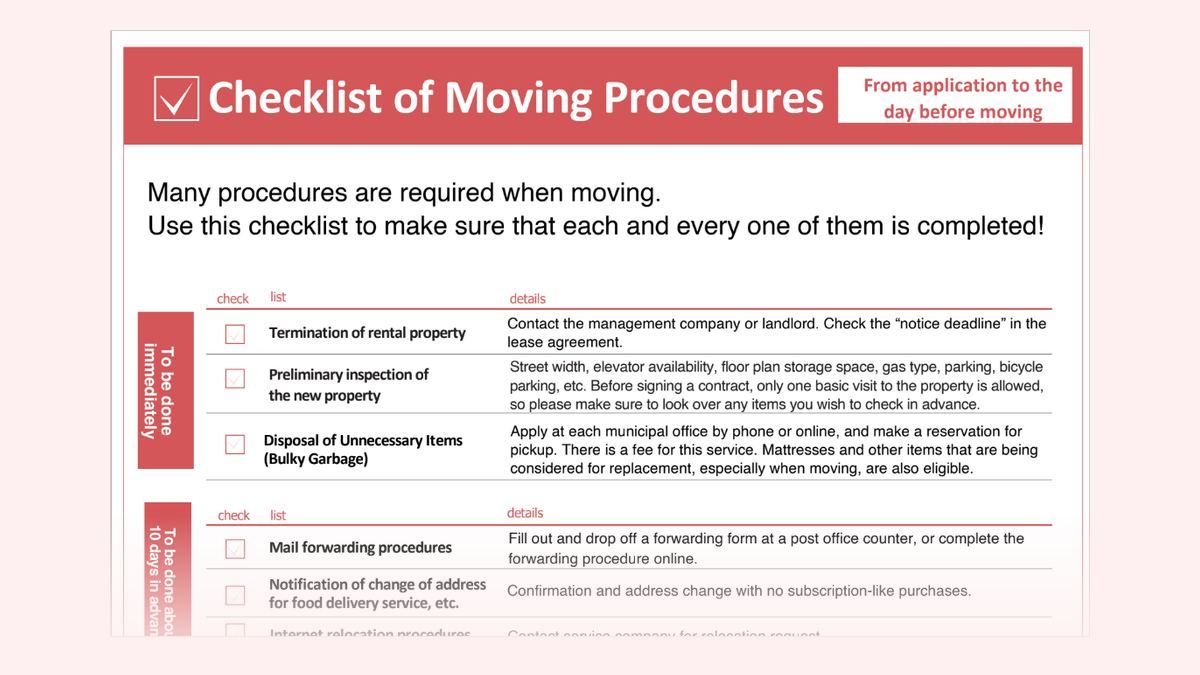
A one-page checklist by Aikagi of everything to do before you move: ending your lease, mail forwarding, utilities, bulky garbage and city-office paperwork, sorted by when to do each one. Add Aikagi on LINE and we’ll send it to you for free.
Moving out and worried about your deposit?
Not sure what applies to you?
Ask Aikagi. Send your question by email and get a written answer within five business days (¥5,000), or book a 45-minute online call with a summary report afterward (¥10,000). Plain English, from someone who has handled this paperwork for foreign residents for years.